

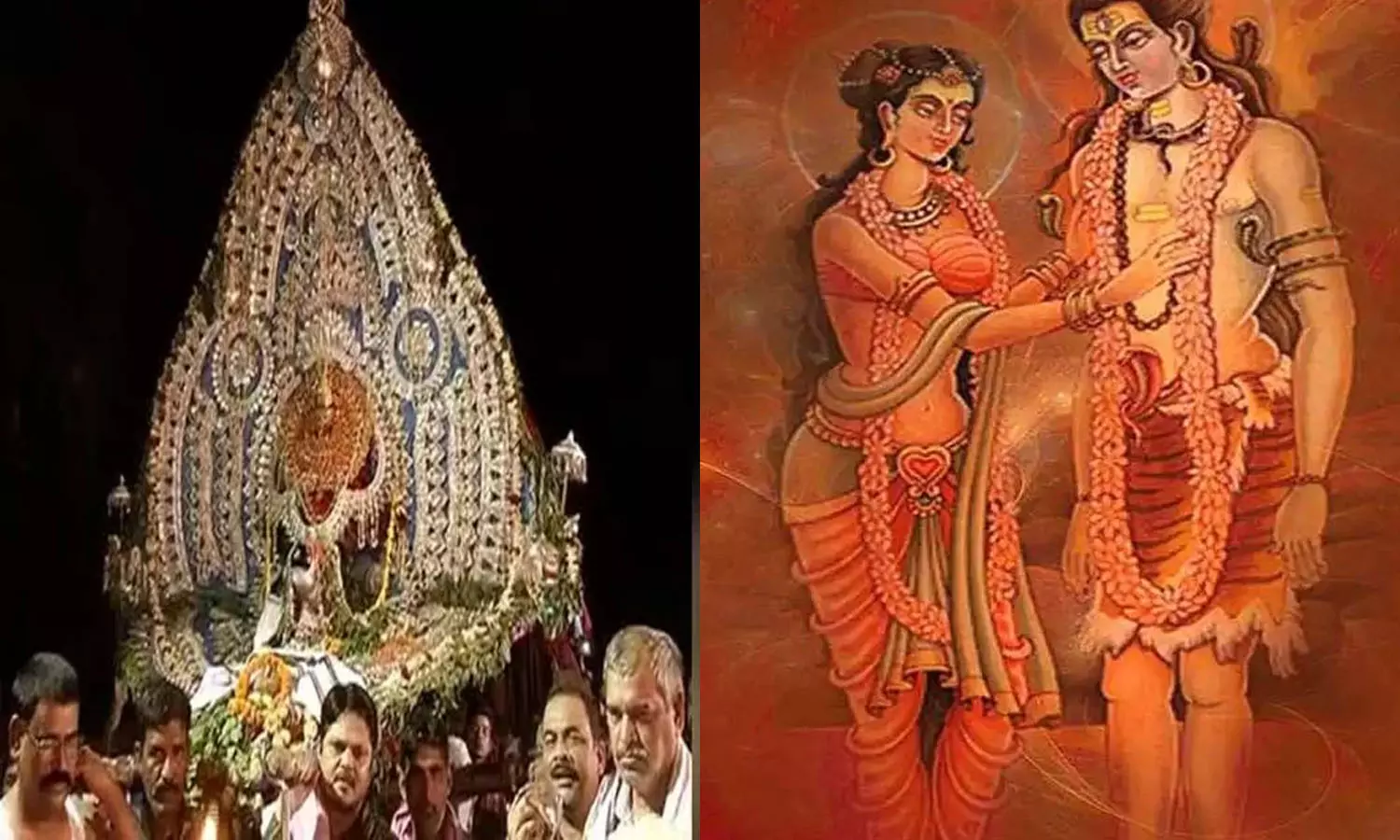
According to history, the divine festival of Sheetal Shashti dates back more than 400 years and was formalized in Sambalpur by Utkal Brahmins, on being invited by the King of Sambalpur.
Sheetal Shashti is celebrated to commemorate the divine wedding of Lord Shiva and Goddess Parvati, marking the union of cosmic powers, harmony, and devotion. The festival also signifies the transition from sizzling summer to the cooling monsoon. It is celebrated on the sixth day of the bright half of the Jyeshtha (May-June) month of the Hindu calendar.
The festival is marked by unique traditions. Devotees seek blessings for relief from the extreme summer heat during the festival by invoking the rain god.
In Odisha’s Sambalpur, the festival is celebrated with week-long festivities in a grand manner. Devotees perform the marriage of Lord Shiva (symbolizing summer) with Goddess Parvati (symbolizing rains) during the elaborate ritual-filled week.
In 2026, the celebrations will take place from June 15 to June 21. The main wedding procession (yatra), accompanied by fireworks, dances, and drums, will occur on June 19, showcasing devotion, culture, and celebration on the streets of the city.
The important events during the week include:
- June 15: Sri Nrushingha Niyuta
- June 17: Sri Sakhigopinath Agamana
- June 18: Baba’s Barat (Procession of the groom)
- June 19: Sital Sasthi Yatra (The Divine Wedding)
- June 20: Mandir Parvesh
The festival is celebrated with enthusiasm by people in Sambalpur and nearby areas, including Bargarh, Padampur, Barpali, and Jharsuguda, through colorful processions and community celebrations. It attracts tourists and pilgrims from across the nation and abroad, as the folk arts showcased during the festival help preserve cultural diversity.
Residents from the border districts of Chhattisgarh and Jharkhand also participate in the celebrations held in Sambalpur.
Sheetal Shashti is also celebrated in West Bengal, but in a completely different manner during the month of Magha. It occurs on the sixth day of the waxing moon (Shukla Shashti), the day following Vasant Panchami when Saraswati Puja is performed.
In Bengal, it is referred to as Sheetal Shashti, Sheel Shashti, or Gota Shashti. This observance is mainly undertaken by married women for the well-being of their children.
On this day, women worship a grinding stone (sheel) and refrain from consuming hot food. The kitchen fire is not lit, and they only eat cold food prepared the night before. A mandatory dish on this day is Gota Sheddho, a medley of seasonal vegetables cooked whole with skin, along with moong dal, tempered with mustard oil and spices. The recipe varies from household to household, with some preparing a one-pot dish that includes black gram and chickpeas, spiced with coriander, cumin, and dried red chilies.